Thursday, 21 February 2013

Newgrange

Newgrange was constructed over 5,000 years ago (about 3,200 B.C.), making it older than Stonehenge in England and the Great Pyramid of Giza in Egypt. Newgrange was built during the Neolithic or New Stone Age by a farming community that prospered on the rich lands of the Boyne Valley. One of the oldest surviving buildings in the world.

Archaeologists classified Newgrange as a passage tomb, however Newgrange is now recognised to be much more than a passage tomb. Ancient Temple is a more fitting classification, a place of astrological, spiritual, religious and ceremonial importance, much as present day cathedrals are places of prestige and worship where dignitaries may be laid to rest.

Photo Source http://www.newgrange.com/
Newgrange is a large kidney shaped mound covering an area of over one acre, retained at the base by 97 kerbstones, some of which are richly decorated with megalithic art. The 19 metre long inner passage leads to a cruciform chamber with a corbelled roof. The amount of time and labour invested in construction of Newgrange suggests a well-organized society with specialised groups responsible for different aspects of construction.

Newgrange is part of a complex of monuments built along a bend of the River Boyne known collectively as Brú na Bóinne. The other two principal monuments are Knowth (the largest) and Dowth, but throughout the region there are as many as 35 smaller mounds.

Newgrange is best known for the illumination of its passage and chamber by the winter solstice sun. Above the entrance to the passage at Newgrange there is a opening called a roof-box. This baffling orifice held a great surprise for those who unearthed it. Its purpose is to allow sunlight to penetrate the chamber on the shortest days of the year, around December 21, the winter solstice.

At dawn, from December 19th to 23rd, a narrow beam of light penetrates the roof-box and reaches the floor of the chamber, gradually extending to the rear of the chamber. As the sun rises higher, the beam widens within the chamber so that the whole room becomes dramatically illuminated. This event lasts for 17 minutes, beginning around 9am.

The accuracy of Newgrange as a time-telling device is remarkable when one considers that it was built 500 years before the Great Pyramids and more than 1,000 years before Stonehenge. The intent of its builders was undoubtedly to mark the beginning of the new year. In addition, it may have served as a powerful symbol of the victory of life over death.

Photo Source http://www.newgrange.com/
Each year the winter solstice event attracts much attention at Newgrange. Many gather at the ancient tomb to wait for dawn, as people did 5,000 years ago. So great is the demand to be one of the few inside the chamber during the solstice that there is a free annual lottery (application forms are available at the Visitor Centre). Unfortunately, as with many Irish events that depend upon sunshine, if the skies are overcast, there is not much to be seen. Yet all agree that it is an extraordinary feeling to wait in the darkness, as people did so long ago, for the longest night of the year to end.

As he spoke, he paused before a great mound grown over with trees, and around it silver clear in the moonlight were immense stones piled, the remains of an original circle, and there was a dark, low, narrow entrance leading within…‘This was my palace. In days past many a one plucked here the purple flower of magic and the fruit of the tree of life…but look: you will see it is the palace of a god.’
And even as he spoke, a light began to glow and to pervade the cave, and to obliterate the stone walls and the antique hieroglyphics engraved thereon, and to melt the earthen floor into itself like a fiery sun suddenly uprisen within the world, and there was everywhere a wandering ecstasy of sound: Light and sound were one; light had a voice, and the music hung glittering in the air…
‘I am Aengus…men call me the Young. I am the sunlight in the heart, the moonlight in the mind; I am the light at the end of every dream, the voice for ever calling to come away; I am the desire beyond joy or tears. Come with me, come with me: I will make you immortal; for my palace opens into the Gardens of the Sun, and there are the fire-fountains which quench the heart’s desire in rapture.’

Æ (George William Russell), “A Dream of Angus Oge,” 1897
On a hill above the bend of the River Boyne in the townland of New Grange there is a mysterious mound. When the new proprietor of the farmland, Scottish settler Charles Campbell, set about improving his holdings, he instructed his workmen in 1699 to use as a quarry the vast pile of stones under the scrub-covered mound on his land. Soon, a broad flat stone that covered the mouth of what they termed a “cave” was seen. Through this act of vandalism, the entrance to the ancient tomb was discovered. 

Photo Source http://www.voicesfromthedawn.com/newgrange/
Serendipitously, the discovery of Newgrange occurred just as the polymath Keeper of the Ashmolean Museum at Oxford, Edward Lhwyd, was traveling through Ireland. Lhwyd asked to be taken to New Grange and was given a tour of the newly discovered tomb. 

They came at last to a broad flat Stone, rudely Carved, and placed edgewise at the Bottom of the Mount. This they discover’d to be the Door of a Cave, which had a long Entry leading into it. At the first entering we were forced to creep; but still as we went on the Pillars on each side of us were higher and higher; and coming into the Cave we found it about 20 Foot high. In this Cave, on each hand of us, was a Cell or Apartment, and another went on straight forward opposite to the Entry. In those on each hand was a very broad shallow Bason of Stone, situated at the Edge.

Correctly deducing from the Roman coins found buried near the top of the mound that the later Viking invaders could not have constructed it, Lhwyd concluded, “it was some Place of Sacrifice or Burial of the ancient Irish.” We observed that Water dropped into the right-hand Bason, tho’ it had rained but little in many Days; and suspected that the lower Bason was intended to preserve the superfluous Liquor of the Upper (whether this Water were Sacred, or whether it was for Blood in Sacrifice), that none might come to the Ground.

Thomas Pownall in 1773 concluded that the engravings on the Newgrange stones were really Phoenician characters, and thus the stones must have originally been used by the seafaring Phoenicians for their own monuments at the mouth of the Boyne, and only later assembled at New Grange. In 1786 Charles Vallancey studied the engravings on the Newgrange stones and translated them to obtain proof that the monument was a “Mithratic cave,” with its name derived from the Chaldean “Grian Uaigh, the “Cave of the Sun.”

Such depredations for the most part ceased when finally all the monuments of Brú na Bóinne came under the protection of the state in 1882.

Early state efforts to investigate and preserve the monuments were often haphazard and poorly documented. When he began his own Newgrange excavations in 1962 Professor O’Kelly was forced to proceed without the missing records from the nineteenth-century Office of Public Works modifications. Thus began the first comprehensive scientific investigation of the tomb, which would consume 13 years of work by the archaeologist and his colleagues, students, and workers from National University of Ireland (NUI) Cork and the Irish Tourist Board. There would be a further seven years until the publication of the research in 1982. This epic archaeological project was ultimately to result in the preservation and the modern reconstruction of the monument, most evident in the brilliant white entrance facade that greets its many thousands of yearly visitors.

Photo Source http://www.knowth.eu/newgrange-images.htm
When the investigations were completed and every stone put back into place, what resulted was a flat-topped heart-shaped mound some 11 m (36 ft) high and about 91.5 m (300 ft) in diameter, covering an area of nearly .4 ha (one acre). The base of the mound is held in place by 97 large kerbstones placed end-to-end horizontally. The mound itself was built from hand-sized rounded boulders, along with layers of sod for stability. The passage into the tomb, together with the corbelled-ceiling inner chamber, is 24 m (79 ft) long, penetrating only a third of the way into the mound. It was constructed, entirely without mortar, of large slabs, some up to 2 m (6.5 ft) tall. Many of these slabs were sumptuously decorated with spirals, concentric semi-circles, and lozenges (diamond-shapes). Similar decorations are to be found on many of the kerbstones.

At the end of the passage the large cruciform central chamber, with its high ceiling, opens into three smaller recesses, each of which held a large “basin stone,” which may have held the burnt bones of the dead. The “Great Circle” of 12 boulder-like standing stones, up to 2.5 m (8 ft) high, partially surrounds the monument. There may once have been a complete circle of some 35 to 38 stones. This feature was built more than a thousand years after the passage tomb itself, which was built in the Neolithic period, around 3200 BCE.

Excavation trenches into the adjacent landscape uncovered evidence of a smaller (destroyed) passage tomb, a later ritual monument known as a “woodhenge,” and a ceremonial pathway or “cursus.” There is evidence that the surrounding area may have once contained up to forty tombs. 

As archaeologist Michael Herity put it. Probably the most dynamic and accomplished people to settle in Ireland during the whole span of prehistory were the builders of the passage graves. In energy and creativity they are rivaled only by the Celts. Their spectacular tombs, the massive tumuli with which they are covered, and the carvings on the tomb walls are their best-known achievements; these are all the more remarkable when we consider that they were erected in the Stone Age.
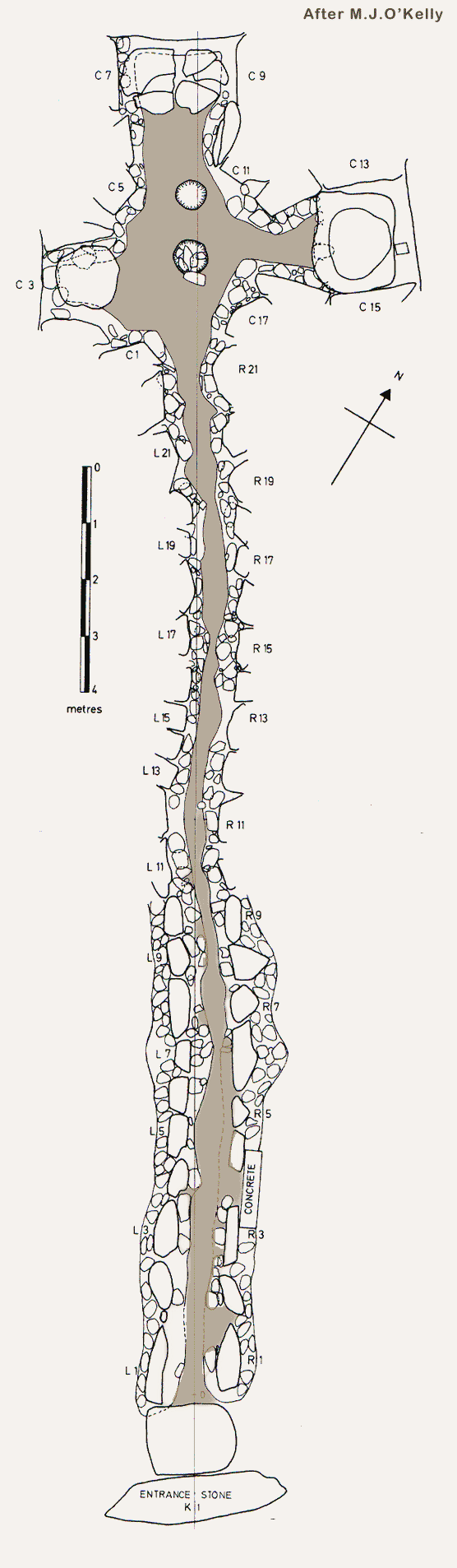
Photo Source http://www.voicesfromthedawn.com/newgrange/
Excavation diagram of the Newgrange Passage (After O'Kelly)
Before the tomb could be reconstructed in its modern form, the archaeologists had to remove much of the covering cairn and the roofing stones of the passage in order to create a concrete dome protecting the chamber. Other stones were braced and stabilized in position. The heaviest stone removed, using a crane, weighed more than 9,000 kg (ten tons). Although most were lighter, Professor O’Kelly wondered how the Neolithic-era builders could lift such stones. As an experiment he had some of his men, experienced in the handling of large stones, move a 900 kg (one-ton) stone using only rollers on a ramp. With a length of rope, three men were able to move it a distance of 15 m (49 ft) and 4 m (13 ft) in elevation during twelve hours of labor.

Within the tomb there were some items that escaped the attentions of earlier generations of treasure-seekers. A large hammer-shaped pendant was found in the center of the main chamber; nearby were a serpentine marble and some flint flakes. In the west recess a pendant and pieces of bone tools were found mixed with the burnt human bones remains. The east recess was the largest, and was extravagantly decorated on its roof. Recovered from that recess were a bone chisel, marbles, beads, and a pendant.

Human remains, some found mixed into the earth on the floor of the tomb where they were discarded by the eighteenth-century visitors, represented at least five different persons, although there may have been many more. Three of the individuals were cremated; the other two were unburnt.

However many or few were contained in these tombs they must surely have been special in some way. The number of workers and their families who built Newgrange must have been considerable and yet they were not buried in or immediately around it. We have no way of knowing in what way the people who were put inside Newgrange were special; it does not necessarily follow that they were royal or priestly, they may have been special in some quite different way.
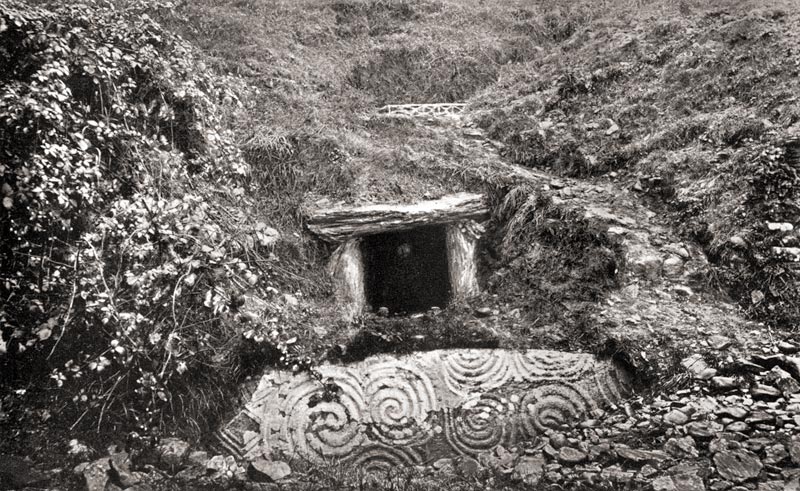
Photo Source http://www.voicesfromthedawn.com/newgrange/
1880 Photograph by R Welch the decorated edge of the roof bos lintel is sen above the entrance.
In their 1841 travel journal the Halls enthusiastically proclaimed Newgrange the spot where …the Druids offered sacrifice; or at least, where they held their solemn meetings; for of its origin there is no doubt, and almost; as little, that it was the ‘Inner Temple’ of their secret rites.

But the local farmers who guided the Halls and other early visitors to the tomb had their own legends of the gods who inhabited the site, gods far older than those of the Druids. In local tradition, Newgrange was the home of Aengus Óg and the Daghdha, the gods of the Tuatha Dé Danaan. The ancient name for Newgrange and the other nearby tombs, including Knowth and Dowth, was Brú na Bóinne, the Palace of the Boyne. From the top of any one of these three major passage tombs, the other two may be seen. Around 1830 a priest went to Newgrange to try to uncover evidence of its ancient name still being used. He found that local usage referred to the site as “Bro-Park,” and nearby were “Bro-Farm” and “Bro-Mill,” all using the modern derivation of the older Irish Brú. “Thus, the identical name An Brugh, (the Palace) by which the celebrated place is called in the Senchus-na-Relec (History of Cemeteries), though unobserved by the learned, still lingers around the monument of the Danaans.”

Professor Michael J. O’Kelly, who led the 1962-1975 excavation and reconstruction of the monument, was inspired by these legendary stories of the Palace of the Boyne. The gods and heros, while found in the Medieval manuscripts, likely date from earlier oral tradition. Professor O’Kelly, in fact, takes the oft-repeated claim that “the earliest Irish stories are a window on the Iron Age” and revises it:

One cannot help feeling that the richly accoutered warriors of the Irish Bronze Age are far more convincing prototypes for thedramatis personae of the Irish heroic cycle than the shadowy figures [of the Iron Age]. If this were the case it would bring [the stories] nearer in time to the people who built the Boyne tombs. Can it have been they who planted the first seeds of Irish oral literature and should one begin to think of this not as a window on the Iron Age but as one on the Late Neolithic?

The legendary resident of Brú na Bóinne, Aengus Óg, was the son of the Dagda, the “good god,” of the Irish. The Dagda had an affair with Aengus’ mother, Boann, who symbolized the river Boyne. To disguise the illicit union the Dagda ordered the sun to stand still for nine months. Thus Aengus was conceived, brought to term, and born all in one day. Aengus Óg, “Aengus the Young,” was also known as “Mac-an-Og,” the son of youth. He is similar to the Greek Eros, the god of youth and love.

According to the twelfth-century Book of Lecan, when he learned that he would inherit nothing from his father the Dagda, Aengus used his wiles to re-order time in his own way. He asked the Dagda if he could live in Brú na Bóinne for “a day and a night,” and his father agreed. Afterwards, however, Aengus insisted that “a day and a night” was equal to “all days and all nights.” Thus he took over possession of the Palace on the Boyne.

In another tale, Aengus fell in love with a girl named Caer Ibormeith whom he saw in a dream. Both his mother and his father searched Ireland for a year, but failed to find her. When finally Aengus found Caer, she was chained up with 150 other girls at the Lake of the Dragon’s Mouth. He discovered that on every other Samhain (November 1) all the girls would turn into swans for one year. Aengus was told he could have Caer if he could identify her as a swan.

Photo Source http://www.voicesfromthedawn.com/newgrange/
‘Who is calling me?’ said Caer. ‘Angus calls you,’ he said, ‘and if you come, I swear by my word, I will not hinder you from going into the loch again.’ ‘I will come,’ she said. So she came to him, and he laid his two hands on her, and then, to hold to his word, he took the shape of a swan on himself, and they went into the loch together, and they went around it three times. And then they spread their wings and rose up from the loch, and went in that shape till they were at Brugh na Boinne. And as they were going, the music they made was so sweet that all the people that heard it fell asleep for three days and three nights.

The epic significance of Brú na Bóinne was woven into the later tales of the Ulster Cycle. As Lady Gregory tells the story, the great Cuchulainn was conceived in the mound of Newgrange when his father Lugh of the Long Hand magically transported his mother Dectire there:

And he put on them the appearance of a flock of birds, and they went with him southward till they came to Brugh na Boinne, the dwelling-place of the Sidhe. And no one at Emain Macha could get tale or tidings of them, or know where they had gone, or what had happened to them.

The Palace on the Boyne also plays a role in the Fenian Cycle, the tales of Fionn Mac Cumhaill and his band of warriors. In the story called “The Pursuit of Diamuid and Grainne” after Diarmuid was gored by a boar and left by Fionn Mac Cumhaill to die in agony, his lover Grainne found his body watched over by Aengus Óg, along with three hundred of his followers.

Oengus said: ‘[There has never been] one night since I took you with me to the Brugh over the Boyn , at the age of nine months, until tonight that I was not watching you and guarding you against your enemies, Diarmuid, and alas for the treachery that Fionn has done to you.’ He continued: ‘Horsemen of the fairy-mound without defilement, let Diarmuid of the fine shape be lifted by you to the Brugh, sweet, full of hosts, everlasting.’
Photo Source http://www.knowth.eu/newgrange-images.htm
The early sanctity of Brú na Bóinne was invoked to enhance the legitimacy of those who were supposedly the later historical pagan kings of Ireland. In legend, the kings of Tara were originally buried in the royal cemetery at Rathcroghan (Crúachan) in Co. Roscommon. But when one of the kings married a woman from the Tuatha Dé Danaan, he and his descendants insisted on burial at the Palace of the Boyne.

Cormac mac Airt was the most celebrated of the pagan High Kings of Ireland. In legend reared by a she-wolf in Co. Sligo’s Caves of Kesh, he grew to be, according to some, an actual historical ruler of the Ui Neil in perhaps the third century CE. According to the story, after he became aware of Christianity he vowed that he would not be buried with his predecessors at Brú na Bóinne, as it was the “chief cemetery of the idolaters,” and instead wished to be interred across the river at Ros na Righ.

There may even be a connection between the Aengus Óg of Brú na Bóinne and the Aengus who gave his name to the spectacular Iron Age fort of Dun Aengus on the Aran Islands. Although in most accounts Dun Aengus was named after Aengus, King of the Clann Umoir, of the Fir Bolg, some think that this Aengus and Aengus Óg, son of the Dagda, are but two aspects of a single god, a Celtic Zeus.

The Neolithic peoples who occupied the rich fertile lands of the Boyne Valley created a community stable and cohesive enough to build structures destined to last more than 5,000 years. Powerful rulers, perhaps priest-kings, inspired the loyalty required for these achievements because they were believed to communicate with their ancestors in another plane of existence. To envision just how many members of the community may have been required to build Newgrange, Professor O’Kelly calculated that the 181,436,948 kg (200,000 tons) of earth and rock required would have taken a workforce of 400 people 16 years to carry to the spot and construct the mound.

It was clear to the excavator and others that all this effort was not solely to create a house of the dead. Newgrange was also seen as a residence of other-dimensional beings, a home of the spirits. The great care taken by the Neolithic builders, which included cutting rain channels on some of the roof stones to keep the interior dry, shows a respect for the structure that was remembered through all the succeeding generations. Respect came even from the invading Vikings of the ninth century, who never entered the tomb, and to those visitors who left golden coins in tribute. No such tribute was found elsewhere at the other nearby passage tombs.

Photo Source http://www.voicesfromthedawn.com/newgrange/
Perhaps the most complex fo the Bru' na Boinne sites is Knowth
The three great Boyne tombs must have been sources of awe, wonder and superstition from very early times, perhaps even from their very beginning; indeed the arousal of these emotions may have played no small part in the minds of their builders in the first place. Perhaps the tombs were built as much to commemorate and arouse respect for the gods or spirits as to provide resting places for the newly dead.

The veneration of Newgrange continued long after the liturgy of its builders was forever lost, even after the tomb had begun to collapse onto its kerbstones, and its entrance sealed by tons of rock and earth. In the late Neolithic and early Bronze Age, a thousand years after the construction of the Brú na Bóinne tombs, the new Beaker culture farmers of the Boyne built their own settlement, squatting right up against the side of Newgrange. It may have been these people who built the incomplete circle of stones around the monument. They also built, just 9 m (30 ft) away from the tomb, a large circular enclosure of timbers posts. In the center of this circle archaeologists discovered pits where small animals were cremated and buried. Nearby is the “cursus,” the surviving 100 m (328 ft) of the route of a ritual procession through the landscape.

The vista must have been very impressive, indicating that by the Late Neolithic religious ceremonies and processions were taking place across the landscape of Brú na Bóinne, with their organisers using the river valley to create their own theatre of ritual.

Such scenarios as these, imagined by archaeologists and anthropologists from clues left in the earth and observations of indigenous peoples, can never completely explain the belief systems of the ancient peoples of the Boyne Valley. In their desire to commune with the remote civilization that built and worshipped at Newgrange, some have today projected their own sincerely held spirituality onto the monument. Just as Vallencey and others saw Phoenician letterforms in the Brú na Bóinne spirals, there are authors today who combine their observations with their intuition to arrive at conclusions quite outside the realm of archaeology. Some have suggested that specific constellations, guide points for ancient astronomers, can be deciphered in the ornamented stones of Newgrange. One book, with information derived from “the ancient tradition of Freemasonry…rediscovered among the Dead Sea Scrolls,” postulates that Newgrange, “a large house built of crystals,” was actually a ” a machine for the reconstruction of a shattered world.” More soberly, Martin Brennan’s work in The Boyne Valley Vision and The Stones of Time has gained a wide following:

The ancient mounds in the Boyne Valley are a great feat of non-verbal communication. Their message comes to us through four millennia of time. By using universal and concrete symbols like the sun and the earth itself, this message transcends the barriers of language. These mounds are concrete realizations of the world view of ancient man in Ireland. In this great vision, the whole cosmos is symbolized.

Photo Source http://www.voicesfromthedawn.com/newgrange/
The neolithic Winter Solstice Ceremony as envisoned by Paul Francis
(copyright OPW)
We cannot know how the excavator of Newgrange might have responded to those seekers of the sacred who made their pilgrimages to Brú na Bóinne following its reconstruction. Professor O’Kelly, sadly, did not live to see the 1982 publication of the book documenting his work. But the academic archaeologist and the devotee of sacred sites may have more in common than is immediately evident. Carleton Jones, of NUI Galway, explains that for the Neolithic people “points in the landscape marked by the Boyne monuments were viewed as supernaturally powerful…” Dr. Jones suggests that the builders of Brú na Bóinne may have chosen the spots for their monuments in order to enhance the existing “power points” they perceived on the landscape. In their Powerful Places in Ireland guidebook, authors Elyn Aviva and Gary White write that Newgrange “continues to be a powerful place, drawing thousands of visitors throughout the year who bring a mixture of curiosity, awe, and reverence.”

Irish author, poet, and self-described clairvoyant Æ (George William Russell) wrote of the inspiration for his dialogue at Brú na Bóinne with Aengus Óg in which “a light began to glow and to pervade the cave…” Russell wrote those words 70 years before Professor O’Kelly became the first person in 5,000 years to see the light of the Winter Solstice enter the passage of Newgrange.

…one warm summer day lying idly on the [Newgrange] hillside, not then thinking of anything but the sunlight, and how sweet it was to drowse there, when, suddenly, I felt a fiery heart throb, and knew it was personal and intimate, and started with every sense dilated and intent, and turned inwards, and I heard first a music as of bells going away, away into that wondrous underland whither, as legend relates, the Danaan gods withdrew; and then the heart of the hills was opened to me, and I knew there was no hill for those who were there, and they were unconscious of the ponderous mountain piled above the palaces of light, and the winds were sparkling and diamond clear, yet full of colour as an opal, as they glittered through the valley, and I knew the Golden Age was all about me, and it was we who had been blind to it but that it had never passed away from the world.

Information sourced from http://www.newgrange.com/ & http://www.voicesfromthedawn.com/newgrange/

Sunday, 17 February 2013

Modron

Photo source http://www.celebratemabon.co.uk Carving of the
Goddess Dea Matrona with child. 
Modron (Mode-ron) is at heart a Mother Goddess. Variations of her name can be found across Europe and will be recognised by many as meaning Mother at a most primal level. Matron, Madron, Matronae, Matrona, Marne.

Modron can be found within the Mabinogion in Welsh literature. She is the Mother of Mabon, Mabon ap Modron, who was taken from her when he was 3 nights old. This is not the story of Modron so much as it is the story of Mabon, to be found within the story of Kilhwch and Olwen or the Twtch Trwyth.

The Mabinogion is a cycle of Welsh legends collected in the Red Book of Hergest, a manuscript which is in the library of Oxford University. From roughly the late eleventh centuary. Mabinogion means 'tales of youth'; although this appellation only applies to a few of the stories, and The Mabinogion is now used as the name of the entire collection. The stories are based on historical characters and incidents from the dark ages in Wales and environs, embellished with supernatural and folklore elements. Throughout there are echoes of primordial Celtic mythology and folklore, including the ancient gods and goddesses.

In Welsh literature, Modron is the daughter of Afallach, king of Avalon/ King of the Fair Folk (Tylwyth Teg). As such, she can also be connected with Welsh Goddess Rhiannon. Like Rhiannon as well, Modron had her son stolen from her when he was but a few days old.

Modron (Matrona) is a Cymric (Welsh), Gaulish and Brythonic goddess known from inscriptions and images in Gaul as well as the Welsh Triads, where she is the mother of the Divine Son, Mabon (Maponos). 
 
Photo Source Unknown
Modron is known from an invocation at Belsme, Haute-Marne, France. This being in the territory of the Belgae. Indeed, the name of the river Marne itself is derived from the name Matrona. Matrona is an aspect of the Celtic mother goddesses, the Matres which are known from literally hundreds of votive altars scattered throughout the entirety of northen Europe such as the Aufunie. Though it should be noted that the Matres are always tripple goddesses and Modron is invariably represented singularly. Statues of the Matres have been found in such diverse lands as Italy, Germany, and Gaul.

Except for the matronymic little of the goddess' own attributes and tales have survived. One of the few of these is Triad 70 from the Trioedd Ynys Prydain which names Modron as the mother wife of Urien of Rheged and the mother of the twins Owein and his sister Morfudd. All except for an episode recorded in the manuscript known as Peniarth 147 which relates specifically to the Triad 70 poem. Here, a tale of the 'Washer at the Frod' type is told. The washer is Modron and the man who encounters her is Urien of Rheged. Like many of the old tales, the story has been re-located from Urien's origins in the old north to Llanferres in Clwyd at a place known as Rhyd y Cyfarthfa (The Ford of Barking) where every evening the local dogs gather to bark at some unknown fear. No man dares go near the place, save Urien himself who ventures out to seek the cause of the dogs' barking. But when he got there he saw nothing but a woman washing at the ford. Urien seized her and had his will of her. However, instead of berating him she blesses his arrival, saying that she had been cursed to wash at the ford until she conceived a child by a christian man. She names herself as the daughter of Afallach and tells Urien to return upon the year's end where she will present him with a son. This he did and received a boy, Owein and a girl, Morfudd.

From this is seems that Modron was known as a Faery Woman and what would be more natural than for such a supernatural being to be the daughter of the King of the Fair folk, Afallach himself.

Today there still exists a well in Cornwall, at Penzance, called St Madron’s Well. The well is located inside the ruins of a small chapel which was built over the well during the early Christian era. St. Madron’s has been called "one of the earliest sites of the Age of the Saints". During the English Civil War the chapel was destroyed by Puritan fanatics, however the well is still well preserved. The legends surrounding it link it back to either being dedicated to Maternus or to a priest from Brittany commemorated as Paternus – a suspicious change of “Mother” to “Father.” St Madron’s Well is famous for its healing, and many a modern pilgrim has left an offering in thanks or hope of health to come. As part of the healing ritual, pilgrims would leave a strip of cloth or ribbon on a nearby tree or bush so that the spirit of the well would perform a healing act upon it. 

Photo Source http://www.authorsden.com
First, let us clarify that there was not a "St. Madron". Modron, is the goddess also referred to as The Mother of Fates, the Spinner of the Threads of Life, the Provider, the Creatrix. She is part of a triad of the Triple Goddess with sculptures of her in the Triple Goddess form found all over Britain, most always near wells. 

Although Modron’s name translates as “divine mother,” she is not the typical interpretation of the Mother. She is the dark Mother, the Earth Mother, associated with the underworld and death. She gives birth to the virgin or maiden. She is the dark, and Her child is the light. Together, they represent the dynamic, ever-changing balance. She teaches that all things whether joyful or sorrowful, are transitory and will pass.

Dea Matrona is mentioned by the Romans in their texts on the Celts living in Gaul though they frequently refer to her as Deae Matronae, triple Goddess figures seen carrying baskets of fruit, cornucopias, and babies. As such She is a Goddess of fertility, both animal and agricultural, and the "Great Mother". The Romans mention many sanctuaries at the source of Gallic rivers. One honouring Matrona is found at the source of the river Marne. She is probably depicted as the double-goddess on a stone carving from the Roman fort at Ribchester in Lancashire.

She is usually a triple-aspect goddess, referred to, by the Romans, as Deae Matres or the Matronae, and depicted as three seated ladies often holding their associated attributes. In Britain, these tend to be babies, fruit and loaves emphasising her role as a Goddess of Fertility in both the human and agricultural world. There was a cult centre in the Cotswolds, at Cirencester, and another somewhere in the Hadrian's Wall region of the North.

Photo source http://en.wikipedia.org Terracotta relief of the Matres, from Bibracte, city of the Aedui in Gaul.
The goddess of peace and children, like other celtic goddesses, she is also a river goddess and is sometimes described as having a triple aspect like the Greek Fates.

Modron is a powerful goddess who lives inside us all. Whether we are male or female, mother through blood or mother through spirit, caretaker or healer, Modron resides in each one of us and in all aspects of nature. She is a deep well of knowledge, the hidden core or wisdom. She is the pervasive presence in our lives, on this earth, that needs no name. She is immanent, all encompassing, and without her, there would be nothing. We worship her every time we care for a sick member of the family, using healing, respecting nature and striving to preserve its beauty for future generations. Her healing mothering presence can be felt in every child's smile and heard in every babbling brook. Her character is mystifying and her story has long been lost. Her power remains as it pulses through each human being who walks on earth.

Monday, 11 February 2013

Comfort when we are Hurting

I want to talk today about the days when we are feeling hurt, less than ourselves, lonely, grieving, and we have been knocked off our usual stance of balance.

This can happen for so many reasons, the list would be endless. Because of my past I feel this pain intensely and find it hard to keep going about my day. Whenever this lesson comes up for me I know it is another opportunity to grow and peel another layer from the onion covering the initial pain that these events reinforce. Once when I was young each event would just confirm to me that my thinking of being unlovable, not enough, not worthy of receiving and another layer would tightly be placed around my onion of initial pain. Over the years this keeps growing and the layers keep increasing, they were a protection from the pain when I was young, however now as an adult they are holding me back and no longer serve me as protection. The pain if we do not remove the layers of onion just intensifies and we are hurt deeply with a feeling of fatality.

Humans self esteems are fragile and we are able to wound each other with words and actions, we are capable of bullying each other, verbally abusing each other and assaulting those around us. Our actions can harm others at varying levels depending on the life experiences those people have had and any or no healing that they have done. We can also hurt ourselves by neglecting our health, abusing food and drugs, behaving recklessly.

We can suffer in these instances however it is never really about the problem at hand it is usually about learned beliefs and ideals we have been taught as a child. This can be from teachers, priests, parents, siblings anyone we held in regard. These people were passing onto us what they believed from their life experiences however these may not be right for us. We could have an argument with a spouse over something small like a mess around the house, but if we really look at the problem honestly it is more likely from their point of view about perhaps something their mother taught them about their self worth and pride in having a clean and tidy room, not really about what ever is laying around at the moment. Or course some of these beliefs will still be correct today however many are not. 

Photo Source http://awakeningpublications.blogspot.com.au

So we can see from this that both the person being the aggressor and the person receiving the action are both coming from a place that has been created many years previously. The more time, energy and emotion you have put in, the greater the pain. The more you believed in that person’s integrity, honesty or commitment, the more you are likely to feel that you will never trust or open yourself up again.

For me I just freeze and am unable to function calmly and with the actions that I would wish to use when I am placed in an upsetting or confrontational position. This is because for me the few words spoken say in this case could be about an untidy house take me straight back to the fear and perceived harm of harsh words being spoken to me as a child from a domestically violent father. So my reaction has nothing to do with the words about a messy house and will seem over the top to the other person.

This reaction is the only thing we are able to work on, we can never change the other person that would have to come from a place within themselves to wish to change, however we can change ourselves. Over the years this is something I have worked on at great length and will continue to do so removing those layers of the onion as I go. This work can be done at any time and there is no need to have to wait for a time of pain to look at this, however the opportunity is definitely there at this time.

There is not a human on this earth who has not hurt, who is not damaged, or is not in pain. We don’t hurt in the same way, of course. And some people have suffered traumas that are hard to fathom.


At times, the pain of life can seem too much to bear, a husband leaves, a child dies, rape, assault, incest, drug abuse, disasters…all of these things hurt us to our core. And at times, all we can do is sit, cry, and try to survive. 

Photo Source http://www.healinghurt.ca/

Once some time passes and we feel we can look at the situation more calmly we can choose to take some actions. It is through them that growth happens, that light comes in. Pain will always be a part of life. But what we do with it, and how we reach out to each other, is what makes the difference. Are we focusing on the cracks, or can we see the light that allows us to grow?

Reaching out to people we know will support and nurture us begins the healing process. Others help us make sense of our suffering, support us, and remind us that, broken as we are, we are still loved. Let your walls crack open, and the light come in. Allow yourself to be heard, understood, comforted.

For me, contentment has little to do with what I have, it’s rather who I have around me that makes it meaningful. But I had to learn that before I could love others and enjoy their part in my life, I had to learn to love myself. I spent too much time trying to replace the love I should have had from my mother and father. Yet the painful void left by years of abandonment and abuse were never going to be eased by anyone or anything. The search for wholeness was never going to be successful because I was missing that which could only be found within me.

I overcame those things that had caused me to fall apart, and with it came the restoration of my inner-self. As I pursued with eagerness and intent, I learnt to refute those negative beliefs I had internalised since childhood. It started out with feel the fear and do it anyway. Everyone has their own uniqueness and therefore their own idea of what makes them whole.

Photo SOurce http://loveandheal.blogspot.com.au
“Courage is resistance to fear, mastery of fear, not absence of fear.”  Mark Twain.

Anyone who has experienced an abusive relationship will know what it is like to be living in fear. Whether it’s physically, verbally or mental abuse, you learn to anticipate and react in a certain way. And when your worst fears are realised, you are made to believe it was your fault and you become uneasy of ‘the next time’. I grew into adulthood believing everyone had the potential to harm me in some way or another. Whether real or imagined, fear controlled my life.

I worked hard to develop the courage to accept, trust and love myself. As I did I was able to find the strength to confront and challenge fear. I would remind myself “To feel the fear and do it anyway.”
It doesn't mean that I don’t get scared. In fact I'm still a cautious person who finds it hard to take risks. And everyday situations like meeting new people still make me nervous. But I am no longer captive to fear and its negative consequences. Today I don’t fight the fear. I welcome it in the form of excitement and anticipation. I rise above it and use it as motivation. I go through it and come out the other side stronger.

“There is no passion to be found playing small – in settling for a life that is less than the one you are capable of living. ~ Nelson Mandela
Now that I live a life without fear and am living in gratitude for all that I have been given and the life I now lead. I am needing still to work on my reaction to negative situations. These throw me back to where I was prior to doing all my work and there I am standing in the headlights unable to move once again. So I thought I would share here some of my findings and work I am looking at to help change this situation.

Photo Source http://www.facebook.com/peacelovejoysparkles

The damage of a life changing event or situation can create a victim mentality that unless challenged will keep you trapped in the past. The longer you remain attached to the pain the harder it is to break free. Your emotional state, whatever it is – anger, bitterness, jealousy, grief becomes your normality. Eventually it can become your refuge, because familiarity is safe.

The transition to survivor and living your life as the person you were meant to be is possible. Courage to take responsibility for your life again. Courage to take the risk of letting go. Courage to explore your inner-self.

Most of all you need courage to face the fear. The fear that if you mess with the wound that somehow it will be made worse and it will never heal. Or that your worst fears about yourself will be confirmed and you will never be whole again. You may believe that you haven’t the strength or the bravery to overcome a situation that has overwhelmed you for so long. You do.

It is only through experiencing your vulnerability that you can be emotionally restored. As long as I have a heart I can heal. And as long as I can heal I have a heart. Forgiveness is the key to freedom. It will release you to live the life as the person you were meant to be. Not the person held captive by the actions and words of someone else. It is a journey taken over many years requiring patience, determination and courage. Forgiving isn't a transient emotion, it’s a decision that continues over time. When another person’s actions have already stolen enough from you and you refuse to let them take any more. Even if there is no recognition of wrong-doing or apology, by forgiving you take control of a situation over which you had none.

Photo: A Healing Heart.
http://carolynhughesthehurthealer.wordpress.com/2012/10/02/a-healing-heart/
Photo Source http://www.facebook.com/TheHurtHealer
“Forgiveness is not an occasional act. It is a permanent attitude” ~ Dr. Martin Luther King.

Remember that forgiveness is not to be confused with being a doormat or allowing the offender to ‘get away with it’. Neither does it mean you should not express your grief and upset. It means that you are willing to move beyond your rawness and vulnerability. And you are willing to let go of the negativity and animosity that hold you emotionally hostage.

However, an everyday challenge can pose itself and suddenly any sense of tranquillity is a million miles away. It’s easy to become stressed, but with the right approach your inner calm can return. The recognition that it is a choice. Serenity isn't passivity. It’s not inertia. Rather, it’s a series of decisions and actions that deal positively with a negative situation. You chose to look at things differently. Accepting the fact that you can do nothing to change the situation. The other person isn't going to take responsibility so you have a choice to make. Feel bitter and hurt, or make a decision to overcome your disappointment and offence. You can accept the things you can not change and find the courage to change the things you can change. It requires a combination of determination, perseverance and prayer but it is worth it. It frees you of resentment and allowed you to move on.

It is necessary to clear up some of the misconceptions about forgiveness. Things forgiveness does not mean:
It does not mean approving of what someone else did.
It does not mean pretending that bad never took place.
It does not mean making excuses for other people’s bad behaviour.
It does not mean overlooking abuse.
It does not mean denying that others tried to hurt you.
It does not mean letting others walk all over you.
It does not mean forgetting the wrong that was done.
It does not mean pretending that you were never hurt.
It does not mean there must be a total reconciliation as if nothing ever happened.
It does not mean that you must tell the person that you have forgiven them.

“Fear defeats more people than any other one thing in the world.” Ralph Waldo Emerson
Photo: 8 WAYS TO HEAL WHEN LOVE HURTS 

Confront Your Anger: Our initial reaction when someone hurts or betrays us is often anger. Maybe we feel violated or disrespected. We want to perhaps lash back and make the other person hurt. Refrain from doing that. Anger expressed when we are hurt can be distorted and damaging to our relationships. Take some time to handle your anger in another way. Talk with a trusted friend, counselor or life coach. Express your feelings in a journal or write a letter to the person who hurt you (but don't give it to them).

Seek Truth and Understanding: How can you better understand the person who hurt you? What truth do you need to know about the other person? Sometimes people hurt us because they are hurting too. Other times people hurt us unintentionally. Ask for the truth and be willing to hear, accept and embrace it. Share your truth and help the other person understand you.

Search for the Lesson: Experiencing pain and suffering is not easy. However, there is usually a lesson to be learned from our pain. What aren't or weren't you paying attention to? What does this experience teach you about yourself and the other person? What changes need to be made as a result of your pain? While the human drama includes pain, we have a choice in how to view it.

Give Grace: We are all human, and we all make mistakes. Some mistakes are worse than others, and some mistakes hurt more than others. Most of us are doing the best we can in any given situation. People make choices based on their past, their belief systems, and the past and collective thought of humanity. Unfortunately, people sometimes make choices that hurt us. We need grace when we make choices that hurt our loved ones, and our loved ones need grace as well.

Accept the Love Deposits: When we are hurt, it is sometimes difficult to accept the apologies and attempts to make amends from our loved ones. Maybe your guard has been thrown up and you're unsure if you can trust again. One way to heal a wounded heart is to allow yourself to truly feel the sincere love deposits that are made to your emotional bank account. Maybe the love will come from the person who hurt you, but maybe it will not. Seek out and embrace the love that is being given to you.

Grieve the Sadness: With hurt comes sadness. Maybe you feel sad about what happened. Perhaps you feel sad about what you didn't receive. Sometimes the sadness is an indication that you need to grieve the loss of a dream. Allow yourself to feel the sadness - let the tears flow. Crying is a very cathartic ritual.

Set Appropriate Boundaries: When our loved ones hurt us continually, we may need to set boundaries for healing to take place. A child may need to go to his room when his anger is destructive. You may need to end a conversation with someone who is hurting you. It's even possible that you need to end a relationship that is repeatedly hurting your self-esteem. Healing cannot take place if we don't take care of ourselves. And people will not begin treating us with respect until we respect ourselves.

Forgive: Lastly, we need to forgive so that we can move on with life. Forgiving does not mean that we condone our loved ones behavior. It does not mean that we allow others to keep hurting us. To forgive means to give up all resentment and the desire to punish the other person. In our heart, it means we've cancelled the debt we feel others owe us.

Sometimes the only way to know love is to experience what love is not. Whatever the question, challenge or decision, love is always the answer. God is perfect love, and His desire is for us to model His character. Healing from hurts moves us closer to love. 

Copyright © 2005 Lori Radun, CEC
Photo source http://www.facebook.com/pages/Love-Quotes
Identifying Emotional Wounds

The first thing we need to do is identify the problem, and realize the need for inner healing. Below is a common list of common symptoms to look for in somebody who has an emotional wound:

Inner rawness: there's often a sense of inner rawness and hurt that doesn't seem to go away.

Irritability: it's easy to become irritable with others, even if they aren't doing anything wrong!

Little or no tolerance: there is a low tolerance issue with others, where you expect and demand from them.

Feelings always rising up: feelings of anger, hate, resentment, etc. seem to "rise up" within you at the slightest offense from others.

Overly sensitive about an event in your past: If there are events in your past which cause you to become very sensitive or angry, or even cause you to lash out, then it is likely revealing a deep emotional wound tied in with that event or memory.

Hard to forgive: it becomes very difficult, if not impossible to love and therefore forgive others. It can also be hard to forgive and love yourself.

Hard to feel loved: it is hard to clearly see and realize the love of others in your life. You may be surrounded by people who love you, but it can be difficult to fully feel and receive that love. There seems to be a wall up that blocks the flow of love into your life.

Lashing out: when there's an inner wound that has festered, it becomes easy to lash out or have sudden outbursts of anger, hate, resentment, etc. You may find it easy to lash out at people who love you, and have done you no harm.

Self-hate: many times when a person is hurt from past abuse, they will begin to think that perhaps what happened to them, was deserved because of something they did or the way that they were. This is not true. Abuse is never acceptable, even if a child was being out of order. Parental love disciplines and corrects, but never abuses.

Easily frustrated: because an inner turmoil that an inner wound causes, it is easy to become easily frustrated with everyday chores and responsibilities.

Escapism: as a result of inner turmoil, it is easy to desire to escape or suppress reality. This can be in the form of overeating, drinking, smoking, spending binges, etc.

Cutting: a person who is a cutter usually has an alter inside the person who is holding much pain, and needs to release the pain or it honestly feels that it deserves the pain.

Retaliation urges: because of built-up hate and anger as a result of unforgiveness, somebody who has a festering inner wound will find it easy to retaliate or snap back at those who offend them or step on their toes.

Irresponsible behavior: inner pain has a way of consuming a person's mind, and eventually this can take on a careless approach to life. It is hard to feel good about yourself if you have an inner wound, and if you don't feel good about yourself, it will begin to show in your lifestyle.

Irrational expectations of others: somebody who has been wounded may set high expectations for those around them. They feel that others ought to hold up to unrealistic standards, and are very intolerable to any mistakes made.

Perfectionism: a person who has an emotional wound may also be performance driven. Perhaps they felt like no matter what they did, they could never please a parent or authority figure, and later on in life, that rejection wound causes the person to be a performer to the point where they are never satisfied and burned out by their efforts.

Feelings of hopelessness: this is also a common result of unresolved inner wounds you become an easy target for feelings of hopelessness.

Drivenness: when you suffer from an emotional wound, it can create a sense of void in your life's meaning, thus driving you to find meaning and purpose and happiness. This could be in the form of college degrees, careers, financial success, etc. You find yourself chasing what you think will bring true happiness and purpose to your life.

Obsessive Compulsive Disorder or OCD: it is my belief that Obsessive Compulsive Disorder (OCD) often involves emotional wounds that were never fully healed. This is especially true with people who have bondages to self-hate, self-resentment, self-unforgiveness, etc.
Photo: Thank you to Jessica Sunasee
https://www.facebook.com/mrjsunassee for sharing this post.
Photo Source http://www.facebook.com/TheHurtHealer
Keys to inner healing

If you're going to receive healing for an emotional wound, you need to first be honest with yourself and what has happened. Let's get started by answering some basic questions:

Who is it that you hate or blame? Be honest with yourself; there's somebody in your past that you, or an alter within you, is holding something against. Be specific, and go back as far as you can. If you can figure out when this wound began, and who is responsible, it is the first step to receiving healing for the wound.

What did they do to you? Make a list of everything that was done to you, which you still hold against them in your heart. What might be a list of things which you still hold onto in your heart? What things can't you seem to easily forget? I'm not referring to a list of people whom you haven't forgiven, but rather a list of people/events where you just cannot seem to release it from your heart.

Don't try to cover up their mistake and say that it was alright. If they did you wrong, then there's no getting around that. Being honest about what was done to you is very important. What things have you done, that you deeply regret? Make a list of things that you still, to this day, regret doing. If you have any feelings of self-hate, self-unforgiveness, etc., then you need to be honest and figure out why you hate yourself.

Is there anything in your past that you feel excessively embarrassed or ashamed of? This is a common cause for self-hate. If there are things which you still haven't forgiven yourself of, then now is a good time to make a list of those things, so that you can effectively forgive and release the hate held secretly within your heart against yourself.

It is vital that we get right down to the roots, and lay out the specific reasons why there are wounds that have not yet healed. Spiritual infections, like natural infections, will fester and grow worse when in the dark; it is important to bring the issues to the light, so they can no longer fester. If you cannot be honest with yourself, and bring these things out into the light, then you're only hindering the healing of those wounds and bringing about healing in your mind and emotions.

Photo: "Be content with what you have; rejoice in the way things are. When you realize there is nothing lacking, the whole world belongs to you." Lao Tsu
Photo Source http://www.facebook.com/TheHurtHealer
The first thing that you want to settle, is any feelings of guilt and shame. When dealing with a physical wound, what is the first thing you do? Cleanse it from germs so that it can properly heal. When dealing with spiritual or emotional wounds, carrying around baggage (guilt, shame, fear, etc.) makes the healing process much more difficult. Carrying around a burden of shame is a sure way to hinder the inner healing process because it mentally separates us from the healing. If we want to freely receive healing for our damaged emotions, then we need to settle it in our minds that we can not be forgiven.

One of the biggest keys to receive healing for damaged emotions, is that our freewill allows us to be healed and restored to wholeness even more than you do! What you want is to open up those wounds so that they can be healed. As long as you hold them in darkness, they will never fully heal. If you had a physical wound, and it turned into an infection, and you merely put a band aid over the wound, would that solve the problem? Of course not! You need to take that mask off, expose it to the light, and apply the healing and germ-killing light into that wound so that it can heal.

Developing a thankful attitude is another big key to receiving healing for our emotional wounds. Thankfulness leads to trust - if you are thankful for what is given you, then you will find it easy to trust those areas of your life. Thankfulness is also a big key to overcoming rejection issues. An unthankful heart is prone to unforgiving, unloving, resentful, and all sorts of hateful feelings against others. It is a poison to our emotional health and ability to receive the healing to our wounds and hurts. 

Begin to be thankful for the little things which were created for you to enjoy. Little things such as the birds singing in the trees or your pet cat or dog - they were made for us to enjoy! It is hard, if not impossible to be thankful and unforgiving at the same time. When we are thankful then we will naturally forgive those who wrong us - that love is contagious and will flow through us. We cannot honestly look at what has been done for us, and not overflow with thankfulness in our heart! Becoming thankful is a huge key to breakthrough if you struggle with unforgiveness. Unforgiveness and unthankfulness are closely related.

Photo: Today and always...


<3 Sylvia, Daily Dose
Photo Source http://www.facebook.com/TheHurtHealer
When we trust a tremendous amount of peace and healing can then take place. Fear will keep a person holding onto what must be released. This is another reason why we must come to know the true good and loving nature of a pure heart. Another key to receive inner healing, especially from a background or root of rejection, is coming to a place where you know that the universe/creator loves you dearly and has your best interest in mind.

Another key to inner healing is not to meditate or continue to think about what was done to you. Once you forgive, don't continue to think about how badly you were wronged. You will cause emotional wounds to fester when you choose to continue thinking about what was done to you. Don't get me wrong, we are to face what was done to us, head on, honestly, and don't deny what was done to us, but once we give all the pain and hurt away, then we need to leave it there. If you have two dogs, and you feed one but leave the other to starve, then which one will be around? The one that you feed of course! We need to make a solid choice not to dwell/feed upon what was done to us, as it will re-enforce the reason as to why we are hurt or angry. This is a very important key to receiving healing from emotional wounds.

As absurd as this sounds, you need to revisit the pain! By going back to the place where the pain was formed, and revisiting that wound in your soul, it will allow you to truly and fully forgive, thus pulling the pain up at it's root. The job can be half-done if you simply say, "I forgive them" without thinking of what you are really forgiving them of. When you can revisit that pain, and forgive out of the love in your heart, then your healing will come naturally! You shouldn't have to keep forgiving the same person for the same offence that took place 10 years ago; we need to reach the point of pain, and forgive at the scene of the accident. I'm not saying that we must revisit the same physical place, but rather the memories and place in your mind where the abuse or pain took place.

Remember, it is not what was done to us that keeps us in bondage, it is our reaction to what was done to us which causes all the spiritual bondage and torment!

Saturday, 9 February 2013

How to Stimulate your Creativity

Photo Source http://www.actioncoach.com
I believe we are all creative, our talents are all varied and different and that is what makes this world so diverse and interesting. No matter what your talent of creativity is or how you work with it, it is there, and needs stimulation to continue to flourish. Even if you think that you do not have a creative talent you will be surprised to find that if you work on stimulating ideas and intuition you will find that you too have a talent to share. Nurture and encourage this side of you to come forth, you will feel better for it, those around you will be inspired and the world as a whole will be effected by your input as we are all connected as one. Go forth and let your light shine.

Awaken your creative imagination, learn to recognize and honour your particular brand of imagination and creativity. Find ways to visually and physically play with it. Imagination empowers your creative imagery and feelings, practice being in that place where you can perceive, visualize, and formulate without being limited by words and sentences and definitions. It is like giving birth, it is a gift that you accept, then develop and share.
Photo Source http://www.mindmapart.com
Ways to keep this creative inspiration flowing is to do new things, visit new places, surround yourself with people whether in a park, shopping centre etc and just sit and watch you will find all sorts of ideas start popping into your head. Along with reading where all sorts of ideas are given to you through situations and characters that are experiencing things outside of your normal day to day life. With all these ideas in your mind allow yourself to daydream and inspiration will come to you no matter how strange or off beat the idea seem stick with it, you will be surprised where ideas come from. Write the ideas down so they are not forgotten, have a notebook handy everywhere you go in your bag, in the car, beside the bed you get the idea so nothing is missed. You will be filled with gratitude at just how wonderful your mind can be and how many new ideas it can bring forth for your consideration. Write down any idea that pop into your mind at any time and jot down the time they do occur. Don’t hold back anything goes, you will never have to show anyone else this journal, so there should be no holding back — it is safe from judgement. Over time you may note that you are more creative at a certain time of day, if so then you can work with this and plan your day around this. I recommend a paper journal so you can doodle, write freely and they go anywhere you are.

Over time look back through your notes and see the themes that emerge, compare the ideas with each other. Then take these ideas and ask questions of others if the area is unfamiliar to you, talk with friends and family and ask for there input.

Photo Source http://101birdtales.blogspot.com.au
Relax and think on all the information you have gathered and follow your intuition, listen to your inner knowing, it always knows what is best for you. Then follow the inner voice and be spontaneous and take the steps necessary to create your idea, don't worry what other people may think, or sometimes more importantly what we may think ourselves, just do it. You will not be letting anyone down if it doesn't work out at first, you will be having fun as when we are creating from this space and heart centre we are fulfilling our souls purpose, and things happen with ease and grace and we lose ourselves in our project.

Put yourself in a beautiful surrounding depending on what you are birthing in your creation you may be able to go outside in nature or if you are inside put on some favourite music, soft candles if appropriate, just make your place of work as relaxing and nurturing as possible. If you are inside remember to take breaks and go outside to breath in the fresh air and loosen the body with some movement all of which will help your creativity flow.

Photo Source http://mycreativenature.wordpress.com/
If you feel that you have come to a stop and have hit the wall so to speak, just put down your project and go about your day. There is nothing to be gained by sitting and trying to force a solution to come this causes frustration and takes you away from your heart centre. When we walk away and go about our day doing the ordinary another approach to the problem will come to us usually when we least expect it, our subconscious mind still has the problem at hand and will be working on solving it, we just have to relax and trust in the process. By doing this our creations just flow and the experience is one of joy and fulfilment when the project is complete. If you are stuck for some time or over several days go back to your creative idea journal and flick back over the pages an idea you had for something else may even help solve this current challenge you have. Alternatively bring in toys or puzzles that require manual manipulation, these unlock reasoning and assist in activating parts of the brain required for creativity.

Everyone has a dominant way of expressing ideas- sketching, writing, talking. If you swap the way you are working on a thought a different idea is easier to find, and your understanding of a particular problem will change. This is both a way to find new ideas and to explore an idea you’re focused on. Or, try explaining your problem to someone else who has no understanding of this type of work and in your need to simplify the idea to get this person to understand it will force you to describe and think about the problem differently.

Some people are most creative when they work with others. Whether you gather with like minded creators, a group of artists for example or whether you gather with other creative people who are working on solo projects, this keeps energy levels high and you are able to be inspired through their achievements and creations. They will bring a new perspective to each others ideas.

Photo Source http://www.open-knowledge-society.org

We all know that when we do something we truly love we are happy as a person and our labours of love are ones of true beauty and bring so much pleasure to others. This is the secrete to creativity doing what makes our souls come alive, it brings us fun and joy, nurturing our bodies in doing what we were meant to do. The more you allow this process to take place the more natural it will feel and our creativity is no longer a project but simply part of our life. We are doing what we love most and everyone benefits, not only the recipients of our labours but also our family and friends for we are truly living our life's purpose and therefore we are the best we can be and have more to offer to our loved ones.

So no matter what your passion of creativity is writing, artwork, sewing, gardening, caring for animals, childcare minding, facilitating workshops, singing, craft work, hang gliding, cooking the list goes on and on when it is your life purpose it becomes like breathing so a part of you that you just have to do it. It is taking those first steps to find what you are passionate about that is the most important. So if you try a type of creativity and find you did not enjoy it as much as you first thought you would just keep trying think of something new and have another go. You will be surprised if you do not put up any type of boundaries around where your mind can wander just what you may end up finding you enjoy doing. Go out and explore as a child with every new idea full of wonder and possibility.

Your ideas, feelings, intuition, vision and ideas are unlimited. They express your pure creative truth and the sacredness of creative thought is one to honour and will make you humble when you allow it to guide you.

“Creativity is inventing, experimenting, growing, taking risks, breaking rules, making mistakes, and having fun.” Mary Lou Cook

Photo Source http://darmano.typepad.com


Tuesday, 5 February 2013

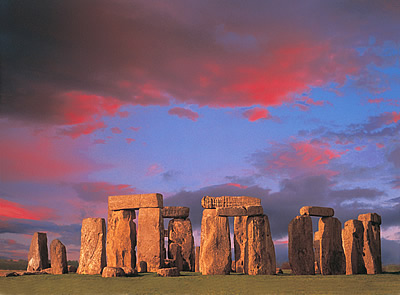
Stonehenge

Photo Source http://owlinthedark.blogspot.com.au

The breathtaking prehistoric monument located near Salisbury in the English county of Wiltshire stands as strong today as it did 3600 years ago. Documented as one of the most famous places in the world to visit, Stonehenge was built in three phases that consisted of over 30 million hours of labour.

There are no written records as to why Stonehenge was built. There are many theories but no confirmations. Some theorise it was a place of dying, others a place of healing and others speculate it's all about astronomy a calender showing sunrise, sunset, eclipse, moon phases.

For me it is a place of mystery and wonder, and an acknowledgement that there are things that we have simply lost as a people's that is greater than we are able to understand today.

The impressive circular landmark of large standing stones dates back as far as 3100 B.C. the estimated time of construction.

Although total construction was not completed at that time, Stonehenge was built in three phases with a time span of 1500 years. There is also evidence at the construction site that it could actually date back as far as 6500 years.

It shows it's true beautiful when the sun rises and when the sun sets. Both show the colours of the bluestones and sarsen stones with different hues if you look closely.

The first stage of Stonehenge was a large earthwork or Henge, comprising a ditch, bank, and the Aubrey holes, all probably built around 3100 BC. The Aubrey holes are round pits in the chalk, about one metre wide and deep, with steep sides and flat bottoms. They form a circle about 284 feet in diameter. Excavations have revealed cremated human bones in some of the chalk filling, but the holes themselves were probably made, not for the purpose of graves, but as part of the religious ceremony. Shortly after this stage Stonehenge was abandoned, left untouched for over 1000 years.

Photo Source http://www.english-heritage.org.uk

The second stage the arrival of the bluestones and most dramatic stage of Stonehenge started around 2150 BC. Some 82 bluestones from the Preseli mountains, in south-west Wales were transported to the site. It is thought these stones, some weighing 4 tonnes each were dragged on rollers and sledges to the headwaters on Milford Haven and then loaded onto rafts. They were carried by water along the south coast of Wales and up the rivers Avon and Frome, before being dragged overland again to near Warminster in Wiltshire. The final stage of the journey was mainly by water, down the river Wylye to Salisbury, then the Salisbury Avon to west Amesbury.

This astonishing journey covers nearly 240 miles. Once at the site, these stones were set up in the centre to form an incomplete double circle. ( During the same period the original entrance of the circular earthwork was widened and a pair of Heel Stones were erected. Also the nearer part of the Avenue was built, aligned with the midsummer sunrise.)

The third stage of Stonehenge, about 2000 BC, saw the arrival of the Sarsen stones, which were almost certainly brought from the Marlborough Downs near Avebury, in north Wiltshire, about 25 miles north of Stonehenge. The largest of the Sarsen stones transported to Stonehenge weigh 50 tonnes and transportation by water would have been impossible, the stones could only have been moved using sledges and ropes. Modern calculations show that it would have taken 500 men using leather ropes to pull one stone, with an extra 100 men needed to lay the huge rollers in front of the sledge.

These were arranged in an outer circle with a continuous run of lintels. Inside the circle, five trilithons were placed in a horseshoe arrangement, whose remains we can still see today.

The final stage took place soon after 1500 BC when the bluestones were rearranged in the horseshoe and circle that we see today. The original number of stones in the bluestone circle was probably around 60, these have long since been removed or broken up. Some remain only as stumps below ground level.

Photo Source http://mikepitts.wordpress.com

Myths and legends of Stonehenge shed light on the nature of the activities and ceremonies performed at the festivals. For example, the legendary Merlin tells King Aurelius:

Laugh not so lightly, King, for not lightly are these words spoken. For in these stones is a mystery, and a healing virtue against many ailments. Giants of old did carry them from the furthest ends of Africa and did set them up in Ireland what time they did inhabit therein. And unto this end they did it, that they might make them baths therein whensoever they ailed of any malady, for they did wash the stones and pour forth the water into the baths, whereby they that were sick were made whole. Moreover they did mix confections of herbs with the water, whereby they that were wounded had healing, for not a stone is there that lacketh in virtue of leechcraft.

The question of who built Stonehenge is largely unanswered, even today. The monument's construction has been attributed to many ancient peoples throughout the years, but the most captivating and enduring attribution has been to the Druids. This erroneous connection was first made around 3 centuries ago by the antiquary, John Aubrey. Julius Caesar and other Roman writers told of a Celtic priesthood who flourished around the time of their first conquest (55 BC). By this time, though, the stones had been standing for 2,000 years, and were, perhaps, already in a ruined condition. Besides, the Druids worshipped in forest temples and had no need for stone structures.

The best guess seems to be that the Stonehenge site was begun by the people of the late Neolithic period (around 3000 BC) and carried forward by people from a new economy which was arising at this time. These "new" people, called Beaker Folk because of their use of pottery drinking vessels, began to use metal implements and to live in a more communal fashion than their ancestors. Some think that they may have been immigrants from the continent, but that contention is not supported by archaeological evidence. It is likely that they were indigenous people doing the same old things in new ways.

Photo Source http://www.heritagedaily.com
Several sarsen uprights have prehistoric carvings on their sides. The earliest of these, high up on the inside face of the fourth trilithon of the horseshoe, is a shallow oblong shape thought to be similar to carvings found in Neolithic stone burial chambers in Brittany, which are sometimes thought to represent in a simplified and symbolic way the figure of a mother goddess. This carving is out of reach of the ground and was therefore made, probably, before the stone was set up.

The carvings on the other stones are all nearer the ground, and probably made after the stones had been erected. Most of them are full size representations of bronze axe-heads of the Early Bronze Age, of a kind commonly made in Britain and Ireland between 1800BC and 1500BC, but there is one carving also of a bronze dagger, which could represent a foreign dagger, of the kind found in the Shaft Graves of Mycenae in Greece, though doubt has been cast on this hypothesis. 

All of the carvings are now much weathered by time, but is is clear that they were shaped by abrasion with small stone hammers, much as the surfaces of the sarsen stones had themselves earlier been dressed smooth. Sarsen stone is far too hard to be cut with bronze chisels.

There is some evidence to suggest that it was visited by Romans stationed in the region and the burial of a Saxon man on the site confirms that it was seen as a place of religious importance during both the dark and middle ages. The earliest known written reference appears in 937 AD with regard to a land deed from King Athelstan to Wilton Abbey which refers to 'Stanheyeg' . It next appears seventy years after the Norman Invasion. Archdeacon Henry of Huntingdon referred to it at 'Stanenges' and recorded in his book 'Historia Anglorum', "No one can conceive how such great stones have been so raised aloft, or why they were built here". Henry Almost 1,000 years later historians, archaeologists and mathematicians are still working on the same puzzle.

The Stonehenge World Heritage Site covers 2,665 hectares (26.6 square km - 6,500 acres). Ownership and management of the World Heritage Site is shared between English Heritage, the National Trust, the Ministry of Defence, the RSPB, farmers and householders in Amesbury, Larkhill and the Woodford Valley. Stonehenge, Woodhenge and parts of Durrington Walls are owned by the state and managed by English Heritage. A large part of the landscape surrounding Stonehenge is owned by the National Trust (827 ha, 31% of the World Heritage Site).

Photo Source http://theballyblog.com

Friday, 1 February 2013

Lammas

Traditionally Lammas is celebrated here in Australia on February 2nd a time when we harvest whatever we have planted, nurtured to fruition, whatever that may be, whether we feel we have accomplished great things or maybe something that we feel we have not freely chosen. It is a time to reflect on how you have changed as a result of your accomplishments.

Think of the things you have gained, goals you have reached, experiences your have had, opportunities you have pursued, healing you have had, friends you have made, gifts you have given then create an attitude of gratitude for all that has been given you. This is something that we all relate to, we may not grow crops in today's society and harvest our own grains but we all have harvested from our input throughout the year of our efforts and labours. It is also a time when we may share and teach our knowledge of things we have achieved. A time to be grateful for all our many blessings and allowing a space of gratitude for things to come. A symbolic harvesting and contemplation of all we have and a time of emotional cleansing of all that no longer serves us. As you allow your higher self to do the necessary inner work to release pains, sorrows, griefs or angers this will lay the foundation for your future harvests as you move along your path to grace.

Photo Source http://www.magickalgraphics.com
It is now high summer and the union of Sun and Earth, of God and Goddess, has produced the First Harvest. Lammas is the celebration of this first, Grain Harvest, a time for gathering in and giving thanks for abundance. At Lammas the Goddess is in Her aspect as Grain Mother, Harvest Mother, Harvest Queen, Earth Mother, Ceres and Demeter. Demeter, as Corn Mother, represents the ripe corn of this year's harvest and Her daughter Kore/Persephone represents the grain - the seed which drops back deep into the dark earth, hidden throughout the winter, and re-appears in the spring as new growth. This is the deep core meaning of Lammas and comes in different guises: it is about the fullness and fulfillment of the present harvest holding at its heart the seed of all future harvest. Honour to the earth mother was given for the fruits of the harvest, the life giving grains, that would keep the people going through the coming winter. The old english name of Hlaf Maesse is the origin of Lammas meaning bread/loaf feast. The first loaf of bread would be baked from the harvest and broken up and shared in the name of the goddess at the Lammas festival. Any bread making crops are celebrated at this festival particularly barley along with ciders, ales, beers and anything brewed. The gathering of seed for the next year’s sowing was also done at Lammas. It is the first of the three harvest festivals of the year.

It is the last of Summer and the Goddess is the Mother of the harvest, as the Sun God slowly starts to disappear. Continuing the cycle of death and rebirth. The earth is still alive with energy but as the energy of the sun begins to fade over the coming months so too does the earth slow. The sun is half way between the Tropic of Capricorn and the Equator on it's way back north.

Corn Dollies were traditionally made from the husks of the first cereals harvested, these dollies were an embodiment of the goddess and kept in the home until spring when they were ploughed back into the earth with the first seeds to increase fertility and continue the cycle of life, death and rebirth.

Photo Source http://www.darkdorset.co.uk

The different way this time of year is celebrated around the world is very interesting from http://serenesblessedbee.wordpress.com

It has long been a time of thanksgiving and revelry in appreciation of nature’s bounty. In Ancient Rome they honoured Saturn, the god of agriculture and the harvest, while in Greece it was Demeter, the goddess of the grain. In Ghana in West Africa they celebrate the harvest festival of Homowo, which means hooting at hunger. It commemorates a devastating famine and the agricultural methods they developed to prevent future ones, and is celebrated with feasting, music and ritual. In China during Chung Yuan, the Hungry Ghost Festival, food is left out to appease the spirits who return at this time, while in the Aztec lands the harvest festival of Tlacaxipehualiztli honoured Xipe Totec, god of vegetation and renewal.

Across the British Isles this first harvest festival was celebrated with feasting, craft fairs, horse markets, games and contests, many in honour of Lugh, the Celtic sun god. Handfastings also took place at these fairs, with people being bound in marriage for a year and a day, and wooden cart wheels were dipped in tar then set alight and ceremonially rolled down a hill to signify the waning of the sun’s – and the sun god’s – power as summer came to an end. He was seen as a sacrifice, going down into the underworld until his resurrection.

In his honour people sacrificed the first sheaf of corn, the first wheat stalk, the first fruits, the first loaf of bread, back to the land and to the earth mother. A libation of mead and an offering of food was part of all their rituals, but at this time of year it became a major part of the proceedings. There are even legends of human sacrifice and death, of kings offering their life in order to return power to the land as it began to waste away and enter the fallow winter period.

Photo Source http://eyeonfaith.blogspot.com.au

Today is still a time of first harvests. Fruit picking is a popular job for many travellers, with farms all over the country taking on seasonal workers. The grape harvesting and wine making begins, and golden wheat fields cover the paddocks. You can create your own little ceremony by going to a farm and enjoying the first fruits of the season fresh from the vine, absorbing the energy of the earth and the life force that flows through the planet.

Long ago, people used this time to prepare for the coming winter by storing food, making jams, sorting out their possessions, fixing leaking roofs and mending tools and fences. You can also plan ahead, setting things in motion now that will pay off later. Learn a skill you might need, research the next step in your project, or work on letting go of a fear that has been holding you back. Even as the harvest is brought in, the seeds to be sown next year are gathered and stored, in a continual dance of planting, growing and culmination.

We can have a go at making our own corn dollies thanks to http://recycledawblog.blogspot.com.au who give us step by step instructions.

Things You'll Need
Medium: straws, corn shucks or grass(10 corn husks per doll)
Decorations: including seeds and other natural decorations
Fasteners: including rubber bands, String or ribbon
Scissors
Markers, glue and yarn or corn silk (if desired for decorating the doll)

Photo Source http://recycledawblog.blogspot.com.au 
Instructions
1.Gather together the straw, grass or corn shucks. Stand them on their ends and even out by cutting excess lengths. Choose your fastener and tie it about 2 inches from the top of the medium. This leaves you with a long end below the fastener and a short, stubby one at the top.Around a half inch to and inch below your first knot, do the same.
2.Place the beginnings of your doll on your work surface. Stand the short, stubby section upright and leave the long section arranged so that the pieces are spread out in four even groups for weaving. It is easiest to set the groups in a compass formation of north, south, east and west.
3.Now you will begin weaving. Take the bottom strand of the eastern straw group and pass it beneath the top of the remaining eastern straw group and the north straw group. Now, take the whole material and rotate it a quarter turn clockwise. This will make the direction of the north strand group the new east group. Once again, take the lower east strand and pass it beneath the top of the East and North strands. Again, make a quarter turn clockwise in rotating your material. Keep repeating this action until your work starts to pull up a basket shape around its stubby ends. Continue weaving until the material completely covers the stubby ends. Leave about 4 inches of raw ends if you intend to make a handle.
4.Gather together the raw ends of the basket. Fasten them off using a rubber band, string or ribbon. After tying the material, do some plaiting or twist the material and make a neat braid.

Photo Source http://recycledawblog.blogspot.com.au 
5.At this point, you have the option to paint your finished product or color it with felt tip or crayon. Personalize your dollies by gluing maple seeds, acorn caps and any other interesting objects you desire. Ask for blessing for your corn dolly. You should ask an agricultural deity. You might say: Goddess of plenty, bless now this image of your fertility.
Decorate with the grape vines, other greenery and the ribbons that represent your celebration or festival. To make the corn dolly representative of a female deity just leave the bottom section to free so that it looks like a dress or skirt.

Photo Source http://recycledawblog.blogspot.com.au 

The website http://paganpages.org gives us information on what items and goddesses etc are connected with Lammas

Other Names: Lughnasadh (Loo-nas-ah), Lunasa (meaning August), Lughnasaad, Lughnasa(Celtic),First Harvest, August Eve, Feast of Cardenas, Feast of Bread, Tailltean Games(Irish), Teltain Cornucopia(Strega), Ceresalia(Ancient Roman) Harvest Home, Thingtide(Teutonic), Lammas(Christian). Laa Luanys, Elembious, Festival of Green Corn (Native American).
Animals & Mythical Beings: Griffins, basilisks, roosters, calves, centaurs, phoenix.
Gemstones:Aventurine, citrine, peridot, sardonyx, yellow diamondsand citrine.
Incense/Oil: Wood aloes, rose, rose hips, rosemary, chamomile, eucalyptus, safflower, corn, passionflower, frankincense, sandalwood.
Colors/Candles: Red, orange, golden yellow, green, light brown, gold, bronze, gray.
Tools,Symbols, & Decorations: Corn, cornucopias, red, yellow flowers, sheaves of grain (wheat, barley, oats), first fruits/vegetables of garden labor, corn dollies, baskets of bread, spear, cauldron, sickle, scythe, threshing tools, sacred loaf of bread, harvested herbs, bonfires, bilberries, God figures made of bread or cookie dough, phallic symbols.
Goddesses: The Mother, Dana (Lugh’s wife & queen), Tailltiu(Welsh-Scottish), Demeter(Greek), Ceres( Roman grain goddess..honored at Ceresalia), the Barley Mother, Seelu(Cherokee), Corn Mother, Isis (Her birthday is celebrated about this time), Luna (Roman Moon Goddess), other agricultural Goddesses, the waxing Goddess.
Gods: Lugh(Celtic, one of the Tuatha De Danaan), John Barleycorn, Arianrhod’s golden haired son Lleu ( Welsh God of the Sun & Corn where corn includes all grains, not just maize), Dagon (Phoenician Grain God), Tammuz/ Dummuzi (Sumerian), Dionysus, plus all sacrificial Gods who willingly shed blood/give their life that their people/lands may prosper, all vegetation Gods & Tanus (Gaulish Thunder God), Taranis, (Romano-Celtic Thunder God), Tina, (Etruscan-Thunder God), the waning God.
Essence: Fruitfulness, reaping, prosperity, reverence, purification, transformation, change, The Bread of Life, The Chalice of Plenty , The Ever-flowing Cup , the Groaning Board (Table of Plenty).
Meaning: Lugh’s wedding to Mother Earth, Birth of Lugh; Death of Lugh, Celtic Grain Festival.
Purpose:Honoring the parent Deities, first harvest festival, first fruits grains & drink to the Goddess in appreciation of Her bounty, offering loaves of sacred bread in the form of the God (this is where the Gingerbread Man originated).
Rituals & Magicks: Astrology, prosperity, generosity, continued success, good fortune, abundance,magickal picnic, meditate & visualize yourself completing a project you’ve started.
Customs: Games, the traditional riding of poles/staves, country fairs, breaking bread with friends, making corn dollys, harvesting herbs for charms/rituals, Lughnasadh fire with sacred wood & dried herbs, feasting, competitions, lammas towers (fire-building team competitions), spear tossing, gathering flowers for crowns, fencing/swordplay, games of skill, martial sports, chariot races, hand-fastings, trial marriages, dancing ‘round a corn mother (doll).
Foods: Loaves of homemade wheat, oat, & corn bread, barley cakes, corn, potatoes, summer squash, nuts, acorns, wild berries (any type), apples, rice, pears, berry pies, elderberry wine, crab apples, mead, crab, blackberries, meadowsweet tea, grapes, cider, beer.
Herbs: Grain, acacia, heather, ginseng, sloe, cornstalks, cyclamen, fenugreek, aloes, frankincense, sunflower, hollyhock, oak leaf, wheat,myrtle.
Element: Fire
Gender: Female
Threshold: Noon